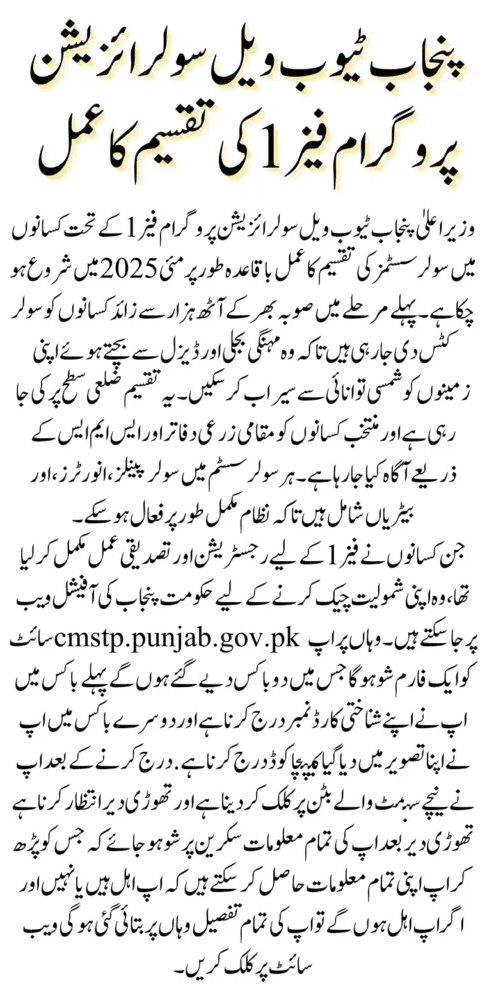
The Government of Punjab has officially started the distribution of solar systems under Phase 1 of the CM Punjab Solarization of Tube Wells Program. This program has been specially created for farmers across Punjab to help them move away from using expensive electricity or diesel to power their tube wells. Instead, they can now use the free energy from the sun by using solar-powered systems. This plan will help farmers save money, ensure a steady water supply for their fields, and also protect the environment from pollution.
The first phase will bring solar energy to 8,000 tube wells all across the province. The goal is to help farmers irrigate their land in a way that is cheaper, more reliable, and much better for the environment. Now, as of June 2025, the actual distribution of solar kits has officially started. Farmers who registered and completed the verification steps are now being invited to collect their solar kits through their District Agriculture Offices. These systems include solar panels, inverters, batteries, stands, and all other necessary parts to run a complete solar-powered irrigation setup.
This guide is designed to explain everything clearly. Whether you’re a farmer, a student, or just someone interested in the program, this article breaks down the entire process in very simple English, so anyone can understand.

Purpose and Vision of the CM Punjab Solarization of Tube Wells Program
This initiative was launched with the clear purpose of helping farmers who are struggling with high electricity prices, unreliable power supply, and costly diesel fuel. A tube well is a machine that pulls water from the ground to water crops. Most farmers use electricity or diesel to run these tube wells, but these are very expensive and not always reliable. Many times, power cuts happen, or diesel prices go up, which makes farming difficult.
By using solar power, which is free from the sun, farmers will be able to run their tube wells without worrying about rising costs. Solar energy is also clean, which means it does not pollute the air or soil. This makes the system good not only for the pocket but also for nature. This project fits into Punjab’s larger goal of fighting climate change and using green energy. It is a way to ensure that farming in Punjab becomes stronger, cheaper, and eco-friendly.
What Will Farmers Receive Under This Program?
Under this program, eligible farmers who are selected during Phase 1 will receive a complete solar system kit. These kits are not just panels; they are full systems that make sure the tube wells can run properly. Each system includes:
- High-quality solar panels to absorb sunlight
- Inverters to convert solar energy into electricity
- Batteries to store electricity for use when sunlight is low
- Mounting structures or stands to install the panels properly
- All wires, connectors, and accessories needed for setup
There are three system sizes available: 10 kW, 15 kW, and 20 kW, depending on the water needs of the land. Larger farms will likely need a 20 kW system, while smaller lands may work well with 10 or 15 kW systems. These systems are designed to work even on cloudy days, which means the farmer will still get water when the sun is not fully shining.
Distribution Timeline and Method
As announced by the government, the distribution began in June 2025. Farmers who finished their registration and passed the verification process are now being contacted by their District Agriculture Offices. The process is happening district by district, so not everyone will receive it on the same day. Farmers are getting SMS alerts from the Agriculture Department when it is their turn to collect the system.
Once a farmer receives the SMS, they must go to the assigned place to collect their solar kit. All items will be provided at one time. Local staff at the district office will help explain how to transport and install the kit. The aim is to make sure farmers do not face any confusion during this process.
Eligibility Requirements: Who Can Get a Solar System?
To make sure that the program benefits the right people, the government has listed some clear eligibility rules. Only farmers who meet all these conditions can receive a solar system under this scheme:
- The applicant must be a permanent resident of Punjab.
- Only one farmer per family can apply and receive the benefit.
- The farmer must own at least 1 acre of agricultural land in Punjab.
- The land should be in the same district where the application was submitted.
- The applicant must be the owner of the tube well, and should have the latest paid electricity bill as proof.
- The tube well must have a 3-phase electric connection.
- This connection must have been installed before October 30, 2024.
- Any defaulters (people with unpaid electricity bills) are not allowed to take part in the program.
These rules are made so that the real, working farmers benefit from this opportunity and not just people looking for free equipment.
Documents Needed for Application and Distribution
During registration and especially at the time of receiving the solar kits, farmers must bring some important documents. These documents help the government verify that the person collecting the kit is the one who applied. Here is a list of documents that are absolutely required:
- A valid CNIC (Computerized National Identity Card)
- A registered mobile phone number that was used during registration
- Land ownership papers showing the applicant owns farmland in Punjab
- Latest electric bill as proof of owning the tube well
- The application number or application receipt
If any of these documents are missing or found to be fake, the farmer will not be given the solar system. Therefore, it is very important to bring original documents and keep photocopies ready just in case.
Also Read: CM Punjab Solar Panel Scheme – A Complete Guide 2025
How to Check if You Are Selected for Solar Kit Distribution
If you are one of the farmers who applied and completed the verification process, there is a simple way to check if you have been selected in Phase 1. The Punjab government has launched an official website where farmers can check their names. Here’s how you can do it:
- Go to the website: https://cmstp.punjab.gov.pk
- Click on the tab named “Solar Tubewell Program Phase 1 Distribution”
- Enter your CNIC number or application number in the search box
- Press the Search or Check Status button
- If you are selected, your name, district, and kit size will appear
- You will also get an SMS confirmation from the Agriculture Department
Once your name is confirmed, your District Agriculture Office will contact you and provide instructions about when and where to collect the system.
Cost of the System and Financial Help by the Government
Solar systems are usually very expensive, but the Government of Punjab is providing a huge subsidy under this program. The government is paying 67% to 75% of the total cost of each solar kit. This means farmers only have to pay 25% to 33% of the price.
Also, farmers do not need to pay everything at once. They can pay their share in easy installments over a period of five years. This makes it affordable for even small-scale farmers. Imagine buying a full solar system but paying only a small amount monthly. This is a great support step by the government.
How Much Money Can Farmers Save With This Program?
Before this program, most farmers spent a lot of money every day on diesel or electricity to run their tube wells. On average, irrigation cost about PKR 1,500 to PKR 3,000 per acre using diesel or electric power. For large-scale farmers, this added up to huge amounts daily.
Now with the solar systems, the cost has dropped to just PKR 50 per acre. This means huge savings every day and every month. Some big farmers may now save up to PKR 300,000 or more per month. This money can be used to buy better seeds, fertilizers, tools, or even more land.
So the solar system not only gives free energy but also helps farmers invest more in their farming work and grow their income.
Also Read: Punjab Free Solar Panel Scheme 2025 – Check Your Ballot Result Online
Environmental Advantages of Solar Tube Wells
The solar tube well program is also a big step toward clean and green energy. When diesel is burned to run a tube well, it releases smoke and harmful gases into the air. This pollution is dangerous for both people and the earth. It also causes problems like climate change and bad air quality.
But when tube wells are powered by solar energy, there is no smoke, no noise, and no pollution. The systems run quietly and cleanly. This makes farming healthier and supports the environment. Punjab is aiming to reduce its carbon footprint, and this program helps achieve that goal.
Support and Contact Information
If any farmer has questions or needs help about their application, eligibility, or collection process, they can call the official helpline:
Helpline Number: 0800-17000 Website: https://cmstp.punjab.gov.pk
These sources are regularly updated with the latest news about registration, new phases, collection schedules, and eligibility conditions. Farmers should follow this website for any future programs as well.
Conclusion
The CM Punjab Solarization of Tube Wells Program Phase 1 has started its distribution phase, and thousands of farmers across Punjab are now beginning a new journey toward cheaper, better, and eco-friendly farming. By switching from expensive electricity or diesel to solar power, farmers can now save money every day while also helping the planet.
The government is offering huge financial support, and the process has been made simple and transparent. Farmers can check their status online, get SMS notifications, and collect their solar kits from local offices. With these kits, Punjab’s farmers can now look forward to a future where water is always available, costs are low, and crops grow better.
This program is a perfect example of how technology, government support, and simple planning can change lives.
Also Read: CM Solarization Program for Agri Tubewells: Subsidy and Application Guide
FAQs: Frequently Asked Questions
Q1: When did the distribution of solar systems start?
A: It started in June 2025, and kits are being distributed district-wise.
Q2: How to check if my name is selected?
A: Visit cmstp.punjab.gov.pk, enter your CNIC or application number, and click on “Check Status.”
Q3: Can I apply now?
A: No, the registration is closed for now. Only those who applied before the deadline are eligible.
Q4: What is the government subsidy amount?
A: The government pays 67% to 75% of the total cost. Farmers pay the rest in easy installments.
Q5: What documents are required to collect the system?
A: Valid CNIC, land ownership papers, latest electric bill for the tube well, and application receipt or number.
Stay connected to the official website for updates on future programs or the opening of Phase 2!
Note: Please note that all the information provided in this post is obtained from official sources and other reliable resources. It is advised not to share your ID card number or mobile phone number here. Thank you for your understanding. We are solely focused on sharing information on ehsaas-porgrams.pk.